What our grandparents understood about movement, cooking, community and rest—before convenience made everything easier.
In this day and age, almost everything can be brought to us with a few taps. Food arrives at our doorstep, rides come to our location, groceries can be delivered, and information is available within seconds.
But it is worth pausing to think about how our grandparents managed their daily errands with far more limited technology and resources.
And while older generations definitely had their own struggles with managing time, convenience has become so deeply woven into modern life that “not enough time” can feel like a sufficient reason to choose the “easier” option.
The hidden cost of convenience
Since then, innovation has made daily life faster, easier and more accessible, making convenience a normal part of how we live. Yet, as we make everyday tasks easier, we have also begun to see ordinary movement and effort as things to avoid.
What we now call “hassle” was, for older generations, simply how things got done; what we now call “wellness” was simply part of their life.
Walking, for instance, may now be considered exercise because it requires more effort than booking a ride with a few taps. For our grandparents, however, walking was simply how they got from one place to another.
The same was true of other aspects of daily life. We cook with health in mind; they cooked because it was how they ate. We make an effort to stay socially connected; they relied on the people around them because community was simply part of everyday life.
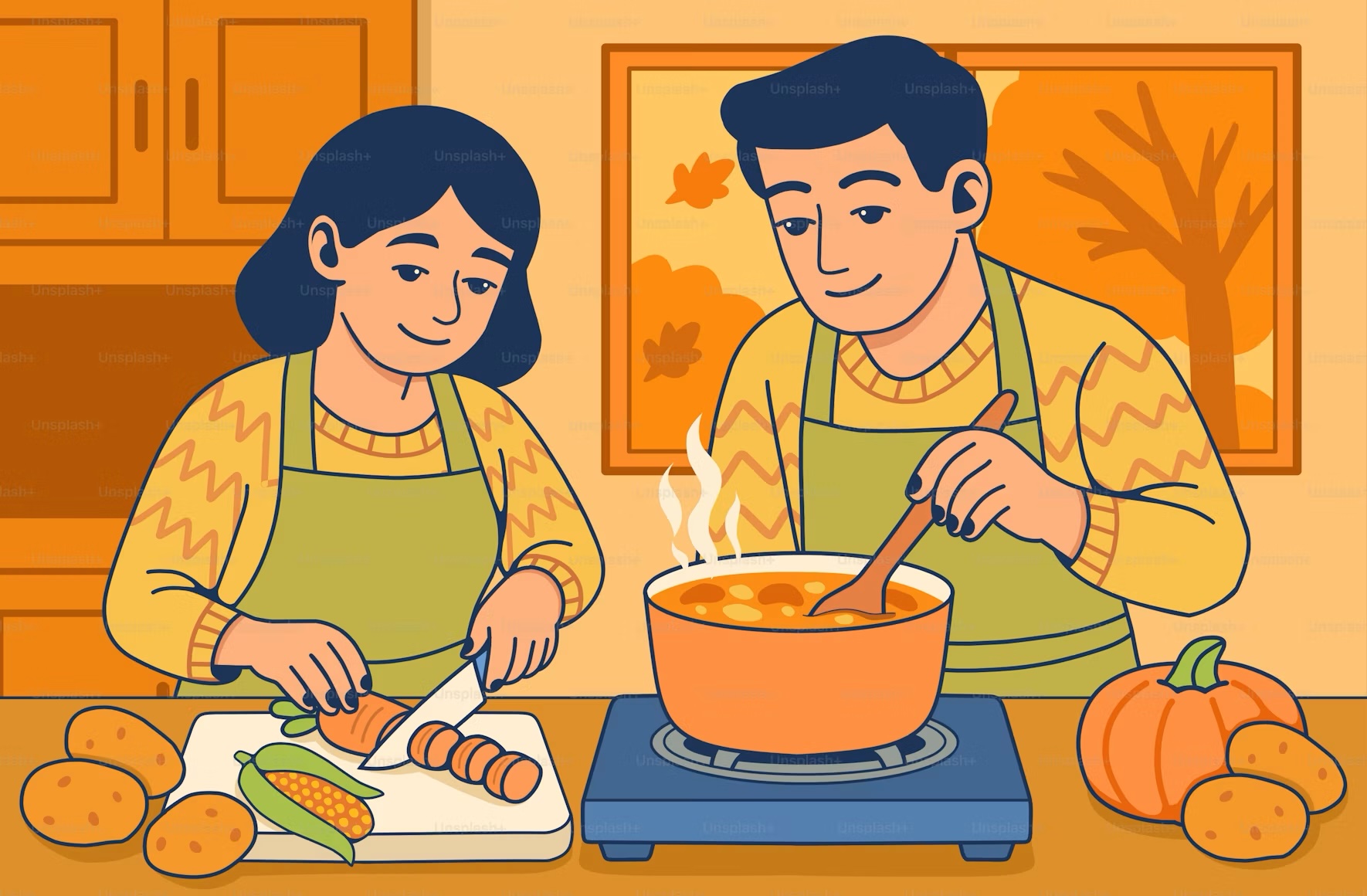
The same can be said about the everyday effort behind something as ordinary as preparing a meal.
When cooking was part of the meal
Ask your grandparents about a meal, and their answer may not begin with, “Check mo kung nasaan na ’yung Grab,” but with, “Check mo kung lumambot na ’yung karne.”
A meal could begin with waking up early to get the freshest produce at the palengke, going from stall to stall to choose the best ingredients, then coming home to wash, chop and cook everything from scratch.
Today, that process can often be reduced to a few taps.
However, home-cooked meals are generally associated with better overall diet quality, while the growing availability of convenient, ultra-processed foods has raised health concerns.
A large review of 45 pooled analyses involving nearly 9.9 million participants found that greater exposure to ultra-processed foods was associated with numerous adverse health outcomes, although the strength of evidence varied and much of the research was observational.
The problem, then, is not that ordering dinner once in a while is harmful. Nor does it mean that every home-cooked Filipino meal was automatically healthy. Like any cuisine, some dishes can be high in sodium, sugar or saturated fat.
What cooking at home does provide is greater control over ingredients, portions and preparation, and research supports the value of that control.
READ: A Little More Green at the Table: Simple Filipino Ways to Eat More Vegetables
Google vs. Community
Perhaps one of the most striking differences between then and now is how much more present and valued human connection seemed to be.
Although technology has made it easier to stay connected, it should not come at the expense of meaningful human connection.
The World Health Organization now recognizes social connection as an important public health concern, as research links social isolation and loneliness to poorer mental and physical health.
In fact, the value of community is still seen among Overseas Filipino workers (OFWs) who often seek out Filipino communities in their host countries, whether through churches, organizations, social groups, or simple gatherings with fellow Filipinos.
These actual, human connections can offer a sense of belonging and support, especially when being far from home can feel isolating.
This is why the old-fashioned “hassle” of showing up can be so important.
Yes, that visit takes an hour and the conversation cannot be reduced to an emoji reaction, the connection that requires effort is part of what makes it more meaningful.
The night as an ending
And eventually, the day would come to an end.
The radio went off. Conversations wound down. Lights were switched off. After a long day of errands, work, and time spent with others, there was little left to do but rest.
Today, however, the day does not always end when the sun goes down.
A phone can bring another conversation. A streaming service can offer another episode. Social media can provide another video, another notification, another reason to keep scrolling.
With so many ways to stay engaged, rest can become something we have to consciously make room for. Research has increasingly linked screen exposure, particularly at night, with poorer sleep outcomes, although the relationship is complex. Screens can also keep the mind engaged when it should be winding down.
Sleep itself is far from passive. It supports immune function, metabolism, memory, emotional regulation, and overall health. Yet modern life often treats it as the first thing to sacrifice when schedules become crowded.
Perhaps the lesson is not that we need to live exactly as our grandparents did. It is that we might benefit from allowing the day to have an ending again.
Reclaiming the hassle
None of this is a call to reject innovation and convenience. But, when we remove every minor inconvenience, we may also remove opportunities to improve our well-being.
Perhaps we can borrow our grandparents’ lifestyle without trying to recreate the past.
Walk to the corner store when there is no need to drive. Cook one more meal at home when there is time. Let an evening end without filling every silence with a screen. Visit someone even when a message would be easier.
Such practices definitely will not replace medical care, exercise programs, or evidence-based treatment.
But they may remind us that wellness does not always have to be another thing to buy, track or optimize.
Sometimes, a little hassle is not something standing between us and wellness.
It may be part of the way back to it.
*Photo by Milhad for Unsplash+
References
Lane MM, et al. Ultra-processed food exposure and adverse health outcomes: umbrella review of epidemiological meta-analyses. The BMJ. 2024.
Mills S, et al. Frequency of eating home cooked meals and potential benefits for diet and health: cross-sectional analysis of a population-based cohort study. International Journal of Behavioral Nutrition and Physical Activity. 2017.
World Health Organization.From loneliness to social connection: Charting a path to healthier societies. 2025.
World Health Organization.Social Connection. 2025.
National Sleep Foundation. The impact of screen use on sleep health across the lifespan: A National Sleep Foundation consensus statement. Sleep Health. 2024.
Sullivan E, et al. Disentangling Sleep’s Role in Emotion Processing. Neuropsychologia. 2025.