

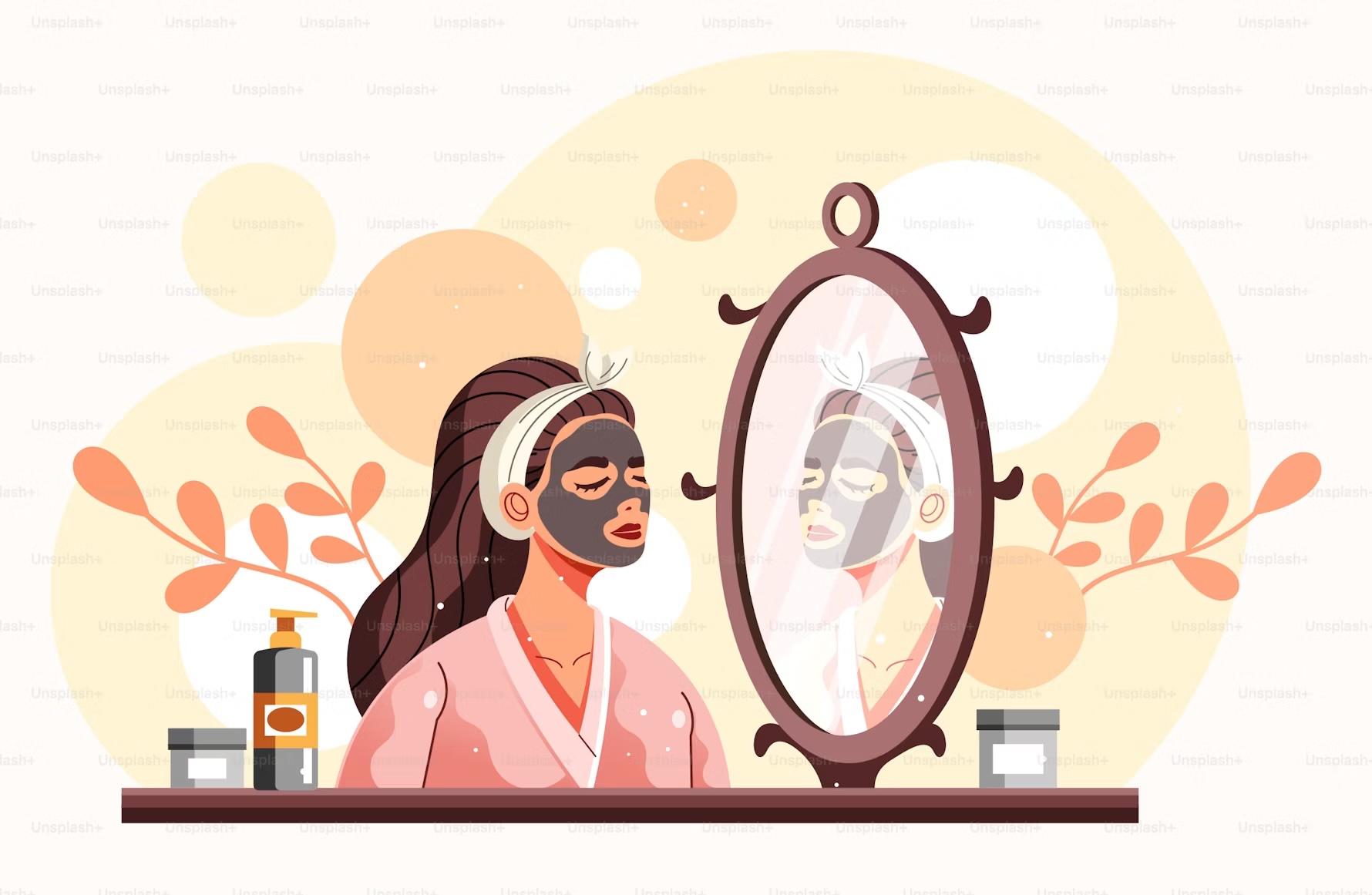
Why Healthy Skin Depends Less on Stripping and More on Protection
For years, many of us have equated clean skin with squeaky skin.
We scrub until our faces feel tight. Then reach for stronger acids when blemishes appear. We celebrate products that promise to “deep clean,” “strip away impurities,” or leave the skin feeling almost weightless.
That sensation can feel satisfying.
Biologically, however, it is often the opposite of what healthy skin needs.
The skin is not simply a covering we polish from the outside. It is the body’s largest organ, a remarkably sophisticated living system that works every hour of the day to protect us from dehydration, pollution, harmful microorganisms, ultraviolet radiation, and physical injury. Long before skincare became a billion-dollar industry, our skin had already developed elegant ways of caring for itself.
Understanding that biology changes the way we approach beauty.
The Skin Is Constantly Working—Even While You Sleep
Every minute, your skin performs thousands of microscopic tasks without asking for your attention.
It regulates temperature. Repairs tiny injuries. Prevents excessive water loss. Produces natural oils. Hosts billions of beneficial microorganisms that help defend against harmful bacteria.
Dermatologists often describe the outermost layer of the skin as a brick wall. Skin cells form the bricks, while lipids—including ceramides, cholesterol, and fatty acids—act as the mortar that keeps everything securely in place.
This barrier does something extraordinary.
It allows the body to hold onto moisture while keeping unwanted substances out.
When that barrier remains healthy, skin often feels comfortable, resilient, and balanced.
When it becomes damaged, the skin begins to signal distress.
Dryness. Redness. Stinging. Flaking. Sometimes even acne.
Why “Squeaky Clean” Isn’t Always Healthy
One of the biggest misconceptions in skincare is that stronger cleansing automatically produces healthier skin.
Many cleansers rely on powerful surfactants to dissolve oil, sunscreen, sweat, and makeup. Used appropriately, surfactants play an important role in cleansing. Some, however, can be more drying than others, particularly for people with sensitive skin or conditions such as eczema.
When cleansing repeatedly removes too much of the skin’s natural oil and disrupts its slightly acidic surface, often called the acid mantle, the protective barrier may temporarily weaken.
Ironically, skin often responds by producing even more oil.
This explains why some people experience a frustrating cycle: cleanse aggressively, become dry, produce more oil, cleanse even more aggressively.
The problem may be the routine.
A Growing Appreciation for Gentler Cleansing
Over the past decade, dermatology has increasingly emphasized the importance of preserving the skin barrier rather than constantly challenging it.
This shift explains why many modern skincare routines focus on gentler cleansers, barrier-supporting moisturizers, and ingredients such as ceramides, glycerin, and niacinamide.
Oil cleansing has also gained attention, particularly for removing sunscreen and long-wearing makeup.
The chemistry behind it is surprisingly simple.
Oil naturally dissolves oil.
Rather than relying entirely on strong detergents, an appropriately formulated cleansing oil can help loosen excess sebum, sunscreen, and cosmetics while minimizing disruption to the skin barrier. It is one option among many, not a miracle solution, and it may not suit every skin type. The best cleanser is ultimately the one that leaves the skin clean without leaving it persistently tight, irritated, or uncomfortable.
Healthy Skin Begins Beyond the Bathroom Mirror
Beautiful skin is influenced by much more than what happens at the sink.
Research consistently shows that sleep, nutrition, stress, hydration, and sun protection shape the skin’s appearance over time.
Chronic stress increases cortisol, which can aggravate inflammatory skin conditions. Poor sleep interferes with overnight skin repair. Diets lacking in fruits, vegetables, healthy fats, and adequate protein may limit the nutrients the skin needs to maintain itself.
In many ways, the face becomes a quiet reflection of the body’s overall wellbeing.
The products we use matter.
The life we live matters even more.
A Simpler Evening Ritual
An effective skincare routine can be remarkably simple:
Remove makeup and sunscreen gently.
Cleanse without over-washing.
Apply a moisturizer that supports the skin barrier.
Use active ingredients only when needed and according to your skin’s tolerance.
Finish the day with enough sleep to allow the skin’s natural repair systems to do what they have evolved to do.
Consistency almost always outperforms intensity.
Beauty as an Act of Partnership
One of the most important shifts we can make is seeing skincare as a partnership.
Our skin spends every day protecting us.
Responding with gentleness is cooperation.
At Joyful Wellness, we believe beauty begins with understanding. The more we learn about the body, the less we feel compelled to fight it.
Healthy skin asks us to pay attention.
The healthiest glow is simply the visible result of a body that has been cared for, patiently, consistently, and with respect.
*Photo by Ian Mikraz for Unsplash+
References
Elias, P. M. (2012). Structure and Function of the Stratum Corneum Permeability Barrier. Experimental Dermatology, 21(12), 846–852.
Proksch, E., Brandner, J. M., & Jensen, J. M. (2008). The Skin: An Indispensable Barrier. Experimental Dermatology, 17(12), 1063–1072.
Grice, E. A., & Segre, J. A. (2011). The Skin Microbiome. Nature Reviews Microbiology, 9(4), 244–253.
American Academy of Dermatology. How to Care for Your Skin Barrier.
National Eczema Association. Understanding the Skin Barrier.
World Health Organization. Ultraviolet Radiation and Skin Health.