

What Fine Dining Reveals About Attention, Memory, and the Pace of Nourishment
Restaurants often tell stories about provenance and technique. Fewer tell stories about tempo.
At Aurora, now entering its third year and recently recognized as Michelin Selected in Manila’s inaugural guide, the narrative begins with memory. The restaurant bears the name of its owner’s mother—a woman whose cooking once structured family gatherings long before the language of tasting menus entered the scene.
Memory, however, should be more than just culinary method. It must be translated into discipline.
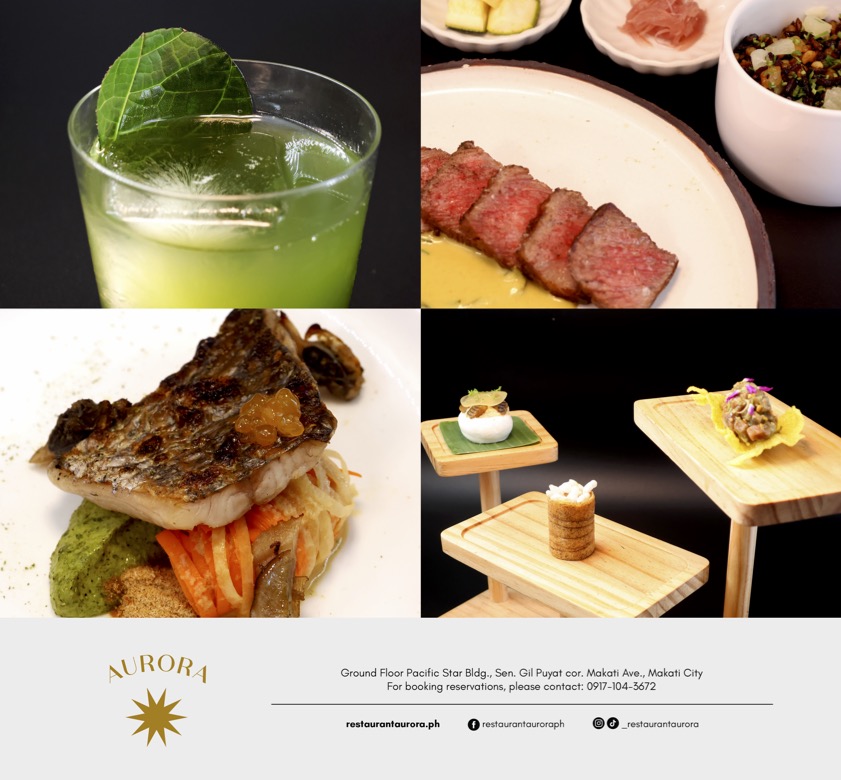
Aurora’s new ten-course tasting menu unfolds with the restraint characteristic of kitchens that understand sequencing as architecture. General Santos tuna cured and layered with seaweed; Negros oysters softened into cream; mushroom tea infused with Cordilleran truffle; Iberico pork glazed with fermented guava; beef braised for forty-eight hours. The menu reads like calibration.

In nutritional science, much attention is paid to macronutrients and caloric balance. Less attention is paid to pacing. Yet emerging research on mindful eating suggests that slower, sequential meals improve satiety signaling and digestive regulation. The act of attending to flavor—of waiting between courses—may influence hormonal responses linked to fullness and stress.
READ: Your Health, Your Move: A Practical Guide to Taking Charge of Your Well-Being
A tasting menu imposes slowness by design. Diners relinquish control over order and timing. The experience becomes designed, carefully put together.
This structure mirrors something often missing in contemporary consumption. In today’s world of delivery apps and multitasking lunches, eating has become a background activity. The table competes with screens. Meals are compressed into fifteen-minute intervals.
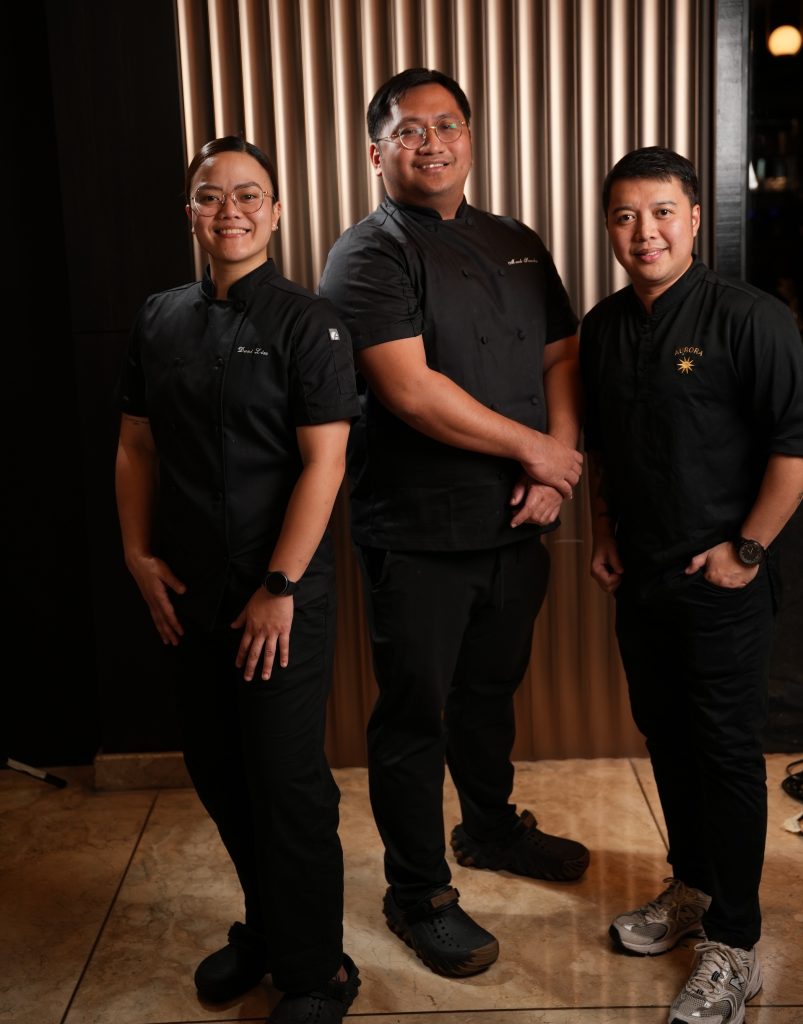
At Aurora, sequence becomes the organizing principle. Executive Chef Mark Sanchez and his team work closely with local producers, anchoring technique to geography. Sustainability appears as sourcing practice.
The result is not merely a collection of courses but an arc. Brightness yields to depth; acidity yields to warmth; savory yields to sweet.
If wellness goes beyond what we eat to how we eat, then the architecture of a meal becomes instructive. Attention slows perception. Perception slows time. Time, in turn, restores proportion.
Fine dining is often framed as luxury. But perhaps its more interesting function is regulation—the reintroduction of tempo in a culture that accelerates everything else.
Memory, after all, is more than what we tasted. It is about how long we allowed ourselves to linger. Aurora gives us that chance.
Photos from Aurora Restaurant
References:
Kristeller, J. L., & Wolever, R. Q. (2011). Mindfulness-based eating awareness training. Eating Disorders, 19(1), 49–61.
(Foundational research on mindful eating.)
Robinson, E., et al. (2014). Eating attentively reduces later energy intake. The American Journal of Clinical Nutrition, 100(3), 774–781.
(Evidence linking attention and satiety.)
Mantzios, M., & Wilson, J. C. (2015). Mindfulness, eating behaviors, and self-regulation. Appetite, 84, 15–21.