


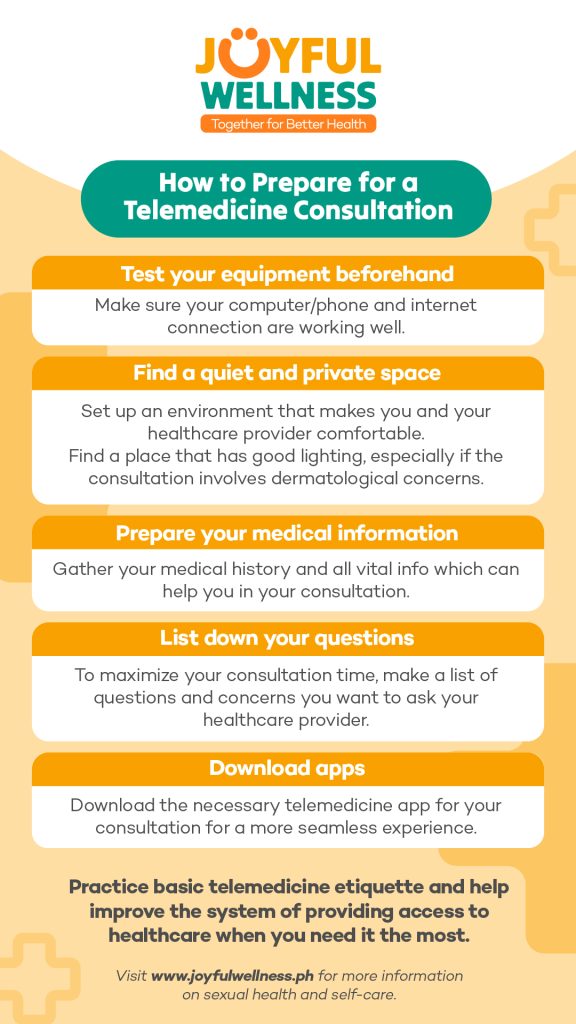
INFOGRAPHIC: How to Prepare for a Telemedicine Consultation

Telemedicine is here to stay. While it does not replace face to face consultations with your doctor, it does come at a close second.
Written by
Betti Bernabe
Published on
June 10, 2025
Share on

Table of Contents

  • Test your equipment beforehand
  • Make sure your computer/phone and internet connection are working well
  • Find a quiet and private space
  • Set up an environment that makes you and your healthcare provider comfortable
  • Find a place that has good lighting, especially if the consultation involves dermatological concerns
  • Prepare your medical information
  • Gather your medical history and all vital info which can help you in your consultation
  • List down your questions
  • To maximize your consultation time, make a list of questions and concerns you want to ask your healthcare provider
  • Download apps
  • Download the necessary telemedicine app for your consultation for a more seamless experience.

Practice basic telemedicine etiquette and help improve the system of providing access to healthcare when you need it the most.

DISCLAIMER

This article provides general information and does not constitute medical advice. Consult your healthcare provider for personalized recommendations. If symptoms persist, consult your doctor.

Photo by Edward Jenner on Pexels

Related Posts

Joy and Happiness icon
Love Language

Love Languages Across Cultures and Generations: The Many Ways Love Finds Its Voice

Love is expressed differently across cultures and generations. Beyond the five love languages, science suggests love adapts—and speaks many forms.
Disease Prevention icon
Panagbenga flowers in Baguio

Baguio’s Panagbenga Festival Adapts as Climate Warms and Bloom Cycles Shift

Panagbenga Festival continues to bloom in Baguio even as climate change reshapes flowering patterns, health risks, and community life.
Nutrition icon
plant protein in meals

Filipinos Shift Diets Toward Diverse Protein Sources for Better Health

National nutrition data reveal how rice dominates Filipino diets—and why adding diverse protein sources may support better health and wellbeing.